AI and the Loss of Creative Thinking
There is no shortage of people bemoaning artificial intelligence (AI) and its risks to us, to education, to our work, and to our society. No shortage of doomsday peddlers talking about bots becoming smarter than us and taking over the world. This essay is not about that. This is about something even more worrying: the atrophy of creativity.
Like most of us, it was only a short time ago—countable in months—that I first experienced ChatGPT, and now let me tell you how my relationship with it has progressed since then. Or, let me tell you how AI has essentially changed my life in a matter of months. And, so far, for the good.
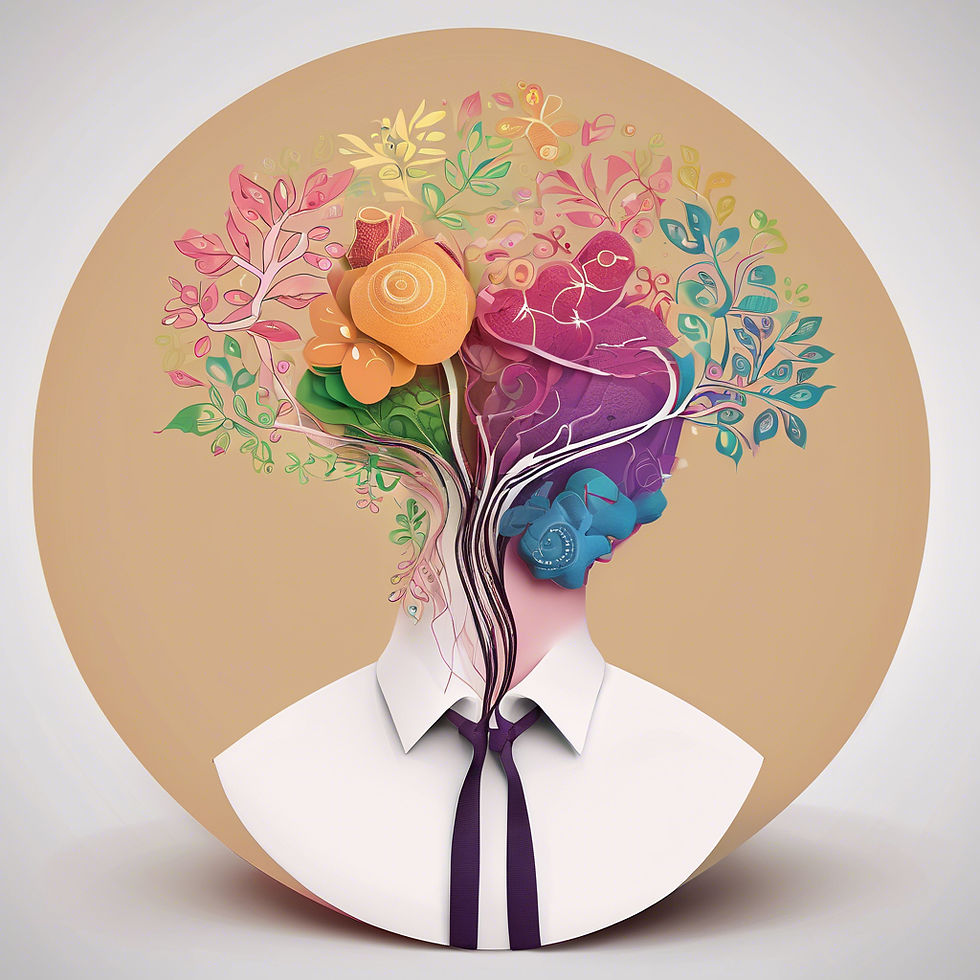
In the first months after my initial exposure, ChatGPT went from being an unreliable novelty to something more reliable, but also something that I felt would be cheating or dishonest to use in any "serious" context, like work. I remember the first time a respected work colleague suggested to me that I use ChatGPT to write a work-related blog, since I wasn't personally very familiar with the topic. This was a year ago or less. I was alarmed and felt that it would be cheating, and I was both surprised and disappointed that he would suggest it. (Now, I do it constantly.)
In the following few months, I had been flipped and I started using ChatGPT regularly, but only as a kind of advanced search engine. And in the few months after that—which brings us to today—it has become essentially indispensable to both my professional and personal lives. I see, and now rely upon, its astonishing time-saving, productivity and enhancement powers. Like some kind of questionable sports-doping! I am currently taking a fairly scientific higher-education course at a university, and I am not sure I would survive without having ChatGPT as my buddy, sitting next to me in class, answering a question that pops into my head in the middle of the night, or clarifying something to me I didn't understand in the lecture the week before.
However, I think I am right in saying that I am still on the "honest" side of its use, in that I don't use it to create anything I wouldn't have been able to create myself if I were willing to invest the time to do it. When the professor mentions a concept that I don't know, I can just discreetly type it into ChatGPT without interrupting the lecture for others by raising my hand (but do I then deprive others of benefiting from "someone" asking that question?). Or when a research problem requires some calculus that I never learned, or to recall a formula that I have forgotten, ChatGPT can help me. Is it cheating? No, I rationalize, because I am not there to learn calculus or formulas; I am there to learn the application of the main subject material of the course. This is the "wholesome" use of AI in education, I reason. But I am also 55 years old and have been through real education before (during the stone age, when getting caught with a calculator in class would be cause for disciplinary action!), so this education for me is not about developing basic skills.
And now, writing an article or marketing brochure that would have taken two days to write and perfect can be done in thirty minutes. Who wouldn't do that? Who would do long division instead of using a calculator?
The long division vs. calculator analogy is maybe a good "break-off" point to explain why I think AI will be revolutionary (and I mean it literally, not hyperbolically) to humankind. You could say, once you've learned how to do long division, as we all had to do at one stage (do they still learn it?), it isn't really necessary to do it by hand ever again - and that's fine. Using a calculator to do mathematics is just a practical time saver and prevents errors in what would otherwise be a very tedious, rote, and difficult process (for many of us). Using a calculator might erode your ability to do mathematics without it (I am not sure I could still do long division anymore, actually), but it doesn't erode your ability to solve problems in general.

But using AI to write an essay or a cover letter is different. It is a time saver, a way to prevent errors, and offers a lot of other benefits. However, with it, you absolutely do avoid in-depth creative or "generative" thoughts about your task. Presenting a solution to a math problem that you solved with a calculator does not suggest you could not have solved it on your own. But presenting a job cover letter or essay made by ChatGPT is absolutely creating something that you couldn't have—or wouldn't have—produced on your own. It's more than just saving time. It's potentially creating something better than you could have. And in a few short years, you can quietly remove the word "potentially" from the last sentence.
I know it sounds like an old man screaming at the clouds, but I can already feel my own creative laziness setting in after just half a year of intensive AI use for everyday tasks, from work to planning a trip itinerary to translation. I repeat, I still feel strongly that I am using it in an additive, productive way, but even so, it does encourage atrophy of creative muscles.

I play some amateur guitar—something I am very passionate about and spend hours and hours doing, to a better or worse effect. But what's the point? If I want to hear an Eddie Van Halen guitar solo, why don't I just turn on Spotify instead of toiling for days to learn it and never being able to play it even half as well?

Because I think (I hope) we all have the desire to create something, to accomplish something. I learn it because if I can master it, I have captured lightning in a bottle, I have accomplished something not many can do. That's the main point.
Will people always want to feel a sense of accomplishment? Of having created something on their own? What will be the last bastion? Art? Will a developer pay extra to an architect to have their building elegantly designed if AI can create something aesthetically just as impressive? Art usually emerges from an artist wanting to communicate something. Making a connection with art - whether it be music, art, or architecture - is about "getting it"; getting the signal that the artist was sending.

Craftsmanship costs, and finding someone who can produce a beautiful and functional object is something people have always justified paying more for. An implicit valuation of the human brain, the human creation. But if automation can always create something technically better, that leaves only the art. Will people still pay for that? Or will they pay even more because it is "human"? Maybe "made by a human" becomes the new "organic".

Some people notice that younger generations are less concerned with the work, effort, and magic traditionally involved in creating music—they simply want to enjoy the final product. AI can generate some pretty convincing songs these days. Do you care?

I was listening to a fascinating interview by Ezra Klein the other day, with a professional education expert, who was speaking—with some despair—about how schools and education need to adapt—or not—to AI. I couldn't help but think: this genie is out of the bottle. This is hopeless. If it hasn't already happened, within a couple of years kids will never ever write essays again. They'll never learn a foreign language, or research or create anything for themselves. The whole meaning of education will have to change; perhaps back into something more about social training? Here's the interview, in case you are interested: https://youtu.be/HQQtaWgIQmE?si=Gb4gFahx3hCRb37o
The more people try to say that AI won't "replace us," the more you know it will. Not literally replace us, but replace a lot of what makes us human. What makes us human is the ability to do something, be a specialist in something, be creative, solve a problem, be proud of accomplishments, and be better or worse than somebody else at something.

AI will absolutely do most intellectual work for us very, very soon. Compared to the Industrial Revolution, it is "brain" jobs that are at risk now. Goodbye doctors, lawyers, judges, pilots, teachers, architects, and engineers.
And maybe—just maybe—after 50-100 years of the necessary class wars, revolutions, and societal upheavals, we will arrive at a place where machines and "AI" do almost all necessary work, and we "organic" humans can just kick back and relax. There will have to be some kind of "nouveau communism" to deal with things like earning money and what means are used to pay for these things that are made by machines, and who you buy them from—but let's leave that discussion for another blog. I do think that in 200 years, life could be marvelous if we sort out the above-mentioned. Although we still need to sort out that pesky trait of people needing to find ways to dominate or exceed others, create hierarchical social structures... and if not in money, commerce and work, then how will that manifest? Something more insidious? People have to have something to do to fill the day.

Maybe that's the (only) role for education in the future? To teach us how to live with one another when our thousands-of-years-old mechanisms have evaporated.
But in that future, what will satisfy us as people? Do we need tasks? Do we need to feel productive? Will we always? If creativity still matters, will it still matter in 100 years? Will the defining characteristic of real humans - the thing that differentiates us from machines be: "are fallible"? Who will we really be, if we don't need to create anything?

Why is nobody talking about this?
The real risk in AI is not that it takes our jobs away. Society will find a way to cope with that, and maybe that turns out to be a good thing. But will it also take our creativity away? If so, the "bots" really will have won.
** Disclosure: AI was used in this piece only for spell- and grammar-checking, and for the images, which I let AI generate shamelessly!


Comments